
Industry news
What is STR Optimization and what's next?
Taking a first step toward a better STR Program. Understand what was proposed to Council.
On September 22, Truckee Town Council took up Short-Term Rental Permit Optimization, a workplan item that Visit Truckee-Tahoe (VTT) and Town staff have spent several months researching together. The council meeting set direction for staff rather than adopting an ordinance. It was a first step toward making sure the STR program works the way it was designed to.
Why did this come up?
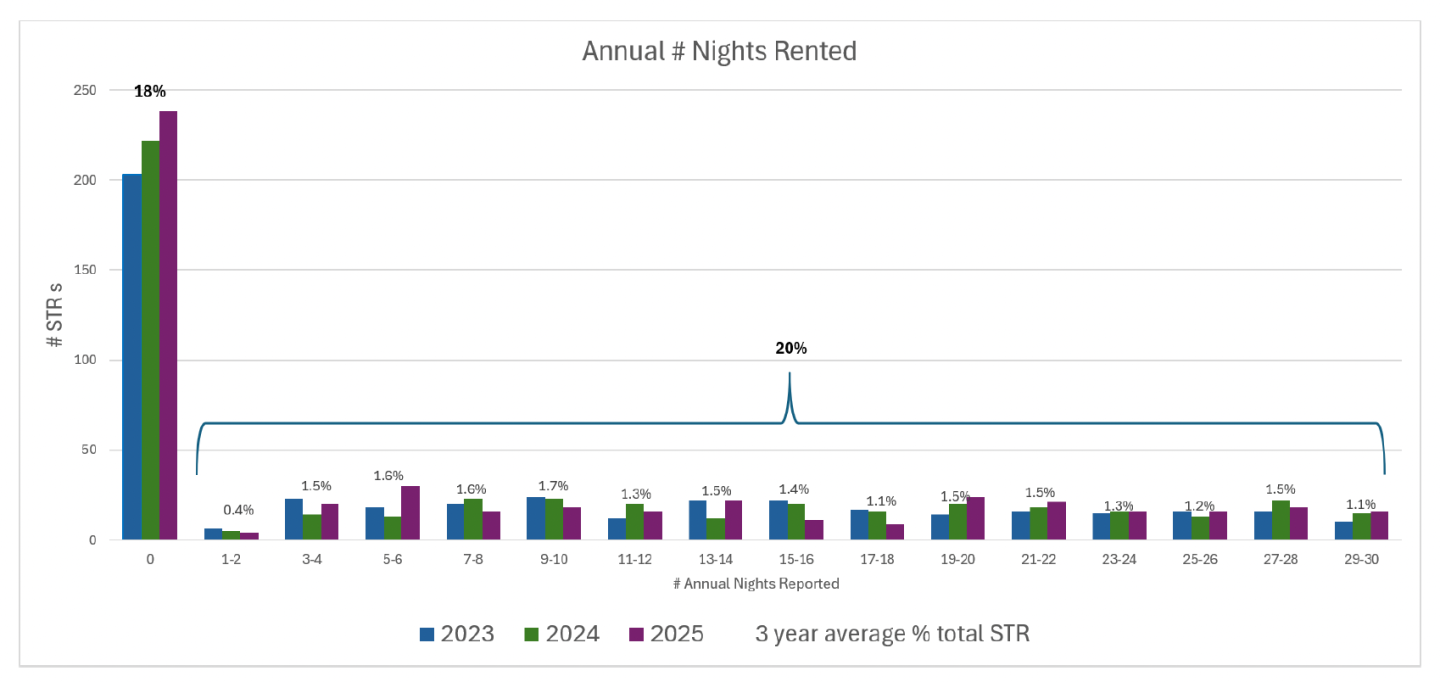
Back in 2022, Town Council determined to cap Truckee's STR inventory to protect neighborhoods. Each year, though, a growing share of those permits report no rental activity at all: about 19% in the most recent Town data report. Meanwhile, more than 300 people are on the waitlist, which has stretched upwards of two years. That cap still does its job, and every permit counts toward it whether it's used or not. But a permit that sits idle doesn't help anyone waiting for one, and it doesn't generate the visitor paid taxes that fund Town services and workforce housing.
Read the STR Division Data Report
Why should you care about inactive STR permits?
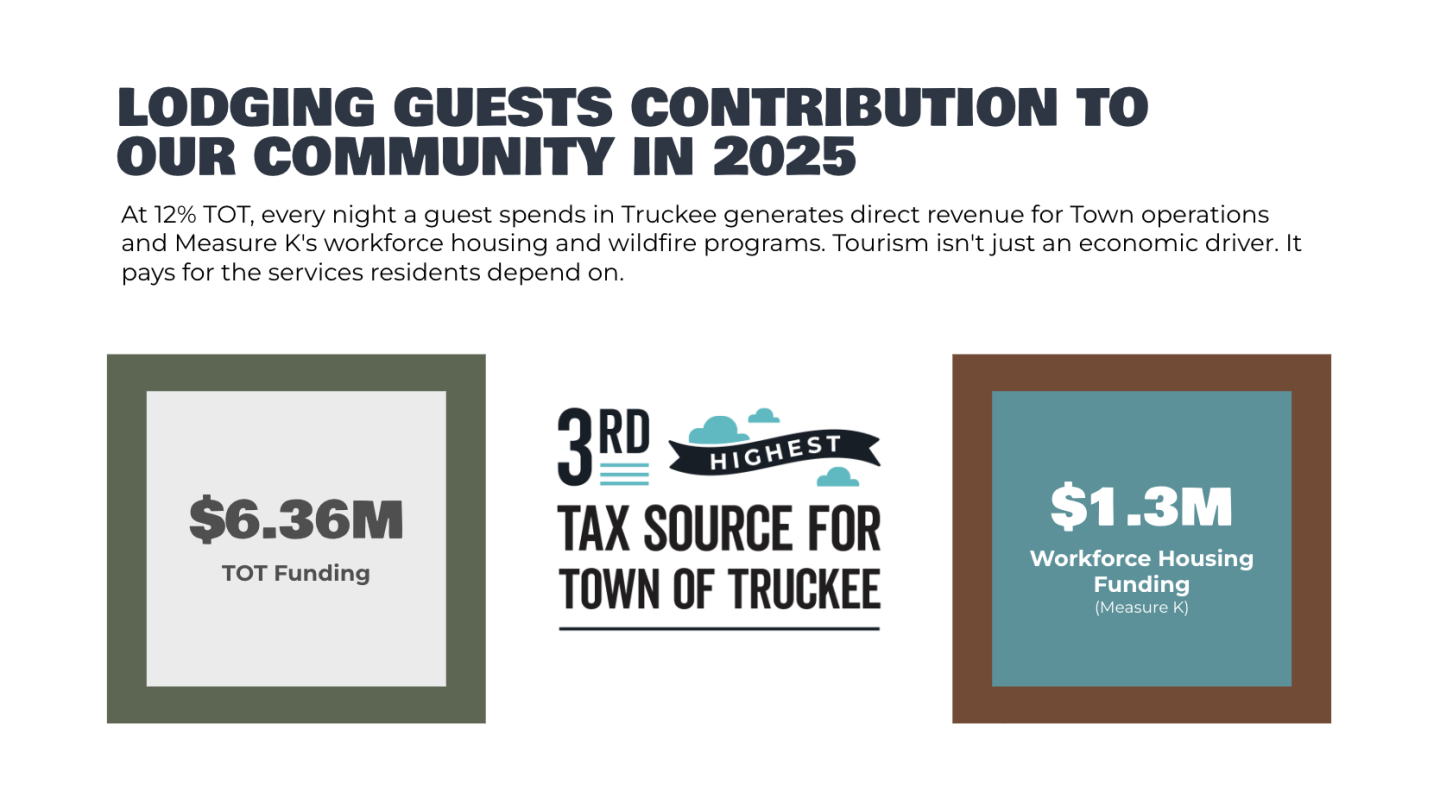
Every night a visitor stays in a permitted home, they pay the Town's lodging tax (TOT). Residents don't pay it. That money funds services everyone uses, like snow removal, transit and road maintenance, and it helps offset costs that would otherwise fall on local households and businesses. Short-term rentals generated about $4.6 million in TOT in FY 24/25, more than 60% of all TOT collected in Truckee, which still remains the third largest revenue source for the Town.
Part of that tax goes somewhere voters chose directly. In 2020, Truckee voters approved Measure K, which adds 2% to the lodging tax and dedicates it to workforce housing. Since 2021, Measure K has raised about $5.7M for programs like Lease to Locals, downpayment assistance programs and the Truckee Home Access Program (THAP). All of it was paid by visitors.
When a permitted home sits unused for a full year, none of that happens. No visitor stays, no TOT is collected, and nothing goes to the housing programs voters approved. Today, nearly one in five of Truckee's permits falls into this category.
Owners have many good reasons for not renting in a given year. But it's important to be clear about what an inactive permit usually means. It rarely means a home is housing a local instead. Only 1.4% of STR properties have converted to a workforce housing program. Data helps explain why: 89% of permit holders report using their property personally and 3.8% of registered STRs are affordable at the 120% AMI. Removing a permit, does not necessarily translate to home availability or affordable living.
In other words, the practical choice for most of these homes isn't a visitor or a local tenant. It's a visitor or an empty house. When permitted homes are rented, they generate visitor-paid TOT, including Measure K. $5.7M in Measure K revenue has supported the Town’s workforce housing programs. Inactive permits generate $0.
What was the Direction Council gave?
Council directed staff to develop a minimum activity threshold. Permit holders would need to remit at least $500 in annual TOT to keep their certificate at renewal. This equates to roughly $4,167 in total taxable receiptsT (8 nights a year at $500/night). This is a practical, modest standard that ensures permits under the cap are actually in use.
Council did not move forward with temporary permits for people on the waitlist. They did did signal interest in revisiting options for primary residents and locals as STRs stay on the Town's workplan.
What happens Next
Staff expects to bring a draft ordinance to Council this fall, with adoption expected in late 2026, before the next renewal cycle. VTT will keep working with Town staff on the details and on education and resources so operators know exactly what's expected before anything takes effect.